
How to Start an Amul Franchise in India (2026): The Ultimate Entrepreneur’s Guide
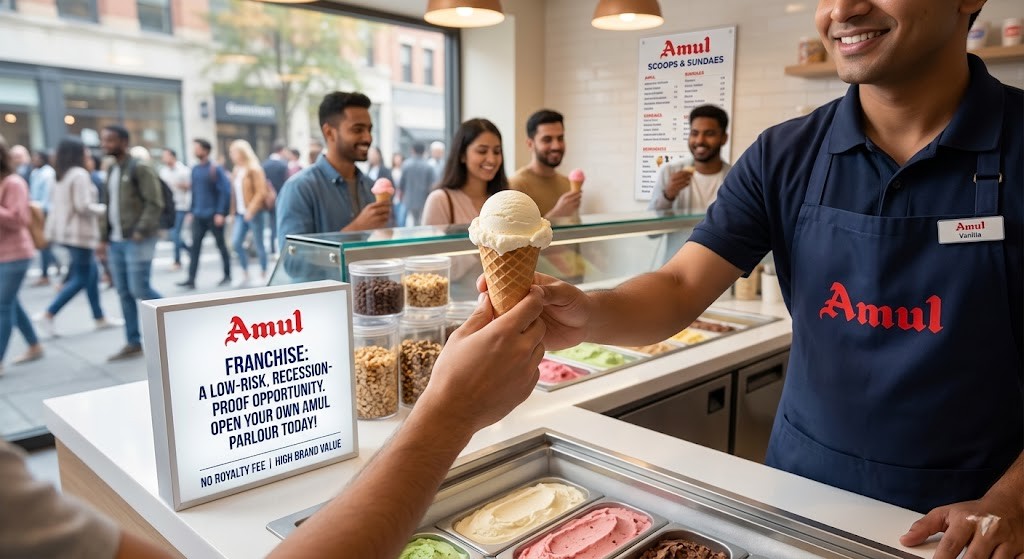
The Indian dairy industry is not just a market; it is a cultural staple. At the heart of this billion-dollar sector lies Amul, a brand that has transformed from a small cooperative into a global powerhouse. For an aspiring entrepreneur in 2026, investing in an Amul franchise represents one of the most secure “recession-proof” business models available.
This guide provides a comprehensive, human-centric look at how you can partner with the “Taste of India” to build a sustainable and profitable business.
- Why Amul? The Power of the Cooperative Model
Founded in 1946, Amul (Anand Milk Union Limited) isn’t just a company; it’s a movement. Managed by the Gujarat Cooperative Milk Marketing Federation (GCMMF), it is owned by millions of farmers.
The “Amul Advantage” for 2026:
- Brand Authority: You don’t need to spend a rupee on marketing your brand’s name; everyone from toddlers to grandparents knows Amul.
- Zero Royalty: Unlike most global food chains, Amul does not charge a royalty fee or profit-sharing commission.
- Diverse Product Portfolio: From fresh milk and butter to premium chocolates and sugar-free ice creams, the inventory caters to every demographic.
- Understanding the Amul Franchise Models
Amul offers flexibility based on your budget and available space. In 2026, four primary models dominate the landscape:
- Amul Preferred Outlet (Kiosk/Railway Parlour)
Ideal for small spaces and high-traffic transit points.
- Area Required: 100–150 sq. ft.
- Investment: ₹2–₹6 Lakhs.
- Scope: Sells the entire range of Amul products (Milk, Curd, Cheese, Chocolates).
- Amul Ice Cream Scooping Parlour
Focuses on the high-margin frozen dessert segment.
- Area Required: 300–500 sq. ft.
- Investment: ₹5–₹10 Lakhs.
- Scope: Recipe-based sundaes, scoops, shakes, and pre-packaged ice cream.
- Amul Café & Restaurant
A more comprehensive model for urban hubs.
- Area Required: 300–800 sq. ft.
- Investment: ₹8–₹12 Lakhs.
- Scope: Includes Amul-branded snacks (pizzas, sandwiches, burgers) using Amul cheese and butter.
- The Financial Breakdown (2026 Estimates)
Transparency is key when planning your finances. Here is what you should set aside:
Expense Category | Estimated Cost |
Refundable Security Deposit | ₹25,000 – ₹50,000 |
Renovation & Branding | ₹1,00,000 – ₹3,00,000 |
Equipment (Freezers, Visi-coolers) | ₹1,50,000 – ₹3,00,000 |
Initial Stock/Inventory | ₹1,50,000 – ₹3,00,000 |
Working Capital (Monthly) | ₹50,000 – ₹1,00,000 |
Pro Tip: While Amul doesn’t charge a franchise fee, ensure you have a “rainy day” fund for the first 6 months of operations to cover electricity and staff wages while you build local footfall.
- Profit Margins: What Can You Earn?
Amul provides fixed margins on its products, ensuring price stability across the country.
- Pouch Milk: 2.5% – 5% (Low margin, but high volume/frequency).
- Milk Products (Cheese, Paneer, Butter): 10% – 15%.
- Ice Cream: 20%.
- Recipe-based Items (Scooping Parlours): Up to 50%.
Monthly Earnings Potential: A well-located Amul parlour can generate a net monthly profit of ₹50,000 to ₹2,50,000. Most owners see a full Return on Investment (ROI) within 6 to 18 months.
- Eligibility and Requirements
Amul is selective about its partners to maintain brand standards. To apply, you need:
- Identity: Must be an Indian citizen (21+ years).
- Location: A commercial space in a high-footfall area (markets, schools, or residential complexes).
- Legal Paperwork:
- GST Registration.
- FSSAI License (Mandatory for food businesses).
- Property ownership documents or a registered lease agreement.
- Aadhar and PAN Card.
- The Step-by-Step Application Process
- Inquiry: Visit the official Amul website and navigate to the “Amul Parlours” section.
- Online Form: Fill out the application with your location details and investment capacity.
- Site Inspection: An Amul Sales Officer (ASO) will visit your proposed location to assess its potential.
- Approval & Deposit: Once approved, you pay the refundable security deposit via Demand Draft.
- Interiors & Branding: Amul provides the design specifications. You must ensure the shop looks like a standard Amul outlet (using their signature blue and white theme).
- Stocking: Place your first order through the local distributor.
- Grand Opening: Launch your store with local promotions.
- Humanizing the Business: Tips for Success
A business is more than just numbers; it’s about people. To thrive in the 2026 market:
- Focus on Hygiene: In a post-pandemic world, cleanliness is your best marketing tool. Ensure your staff wears uniforms and the freezers are spotless.
- Local Engagement: Host “Ice Cream Tasting” events for kids in nearby residential societies.
- Leverage Delivery: Partner with platforms like Swiggy and Zomato, but also offer “Free Home Delivery” for regular milk and grocery orders to elderly residents in your vicinity.
- Seasonal Specials: Focus heavily on beverages and ice creams during the hot Indian summers and gift packs/chocolates during the festive season (Diwali, Rakhi).
- Conclusion
Starting an Amul franchise in 2026 is a journey toward financial independence backed by India’s most trusted dairy name. It combines the stability of a 75-year-old brand with the modern growth of India’s retail sector.
If you have the passion for entrepreneurship and a prime location, Amul offers the perfect roadmap to turn that space into a thriving community hub.
Frequently Asked Questions (FAQs)
Q1: Can I sell other brands alongside Amul?
No. To maintain the franchise agreement, you must exclusively sell Amul products.
Q2: Does Amul provide staff training?
Yes. Amul provides training on how to use their POS (Point of Sale) systems, how to handle deep freezers, and basic customer service.
Q3: Is the security deposit refundable?
Yes, the security deposit is refundable if you choose to close the franchise after the initial agreement period (usually 7 years).
For more information on the latest franchise opportunities in India, visit Franchisee India.